
Milford City Directory Collections
The strongest starting point is a coverage table, because the Milford city directory shelf is not an annual run. The Milford Public Library confirms that local directories are held in the Local History Room. The LDS Genealogy catalog, NARA's 1930 finding aid, and the Gale/Price and Lee reel guide add year and publisher clues. The table keeps catalog metadata separate from a claim that a physical copy is on one particular shelf.
| Collection or run | Years or scope | Where held or found | Access note |
|---|---|---|---|
| Early Milford listings | 1869, 1870, 1882, 1886 | Genealogy catalog leads; verify local holding | Name and address snapshots |
| Connecticut directory images | 1909, 1913, 1917, 1920, 1924, 1926, 1929-1933, 1935, 1937, 1942, 1951, 1955, 1959-1960, 1962-1964, 1966, 1971, 1983 | Ancestry catalog and library access | Uneven availability by year |
| Milford and Orange | 1924, 1926, 1933, 1957, 1963-1964, 1966, 1983 | Catalog and library research lead | Useful across place-name boundaries |
| Milford City Directory | 1927, 1929, 1931, 1935, 1937 | MyHeritage catalog | Licensed or library access may apply |
| NARA census-era finding aid | 1926-1927, 1929-1933, 1935 | National Archives | Supports enumeration research |
The latest listed run is 1983, while the earliest located catalog item is 1869. No official local page establishes the first or last printed Milford directory. Treat a catalog year as a search lead until the volume or licensed image is checked.
Milford Directory Year Runs and Publishers
The Milford directory catalog gathers year-level leads from several holding systems. Price and Lee Co. is confirmed for the inspected 1917 Milford volume. Other publisher or holding labels belong to catalog metadata until a researcher opens the volume. That distinction matters when a Milford directory is cited in a family history or address timeline.
The Gale/Price and Lee reel guide records gaps inside otherwise broad ranges. For one early run, 1910-1912, 1914-1916, and 1918-1923 are missing. Later gaps include 1928, 1934, 1938, 1940-1941, 1943-1944, 1946, 1948, 1950, 1952, and 1954 in the listed ranges. These are reel or catalog gaps, not proof that Milford had no printed directory that year.
The Milford city-directory catalog is a useful year-finding route when a search jumps from one available volume to another. The Price and Lee reel guide adds gap notes. Use the nearest prior and next year, then add a deed, newspaper, or town record before concluding that a household moved.
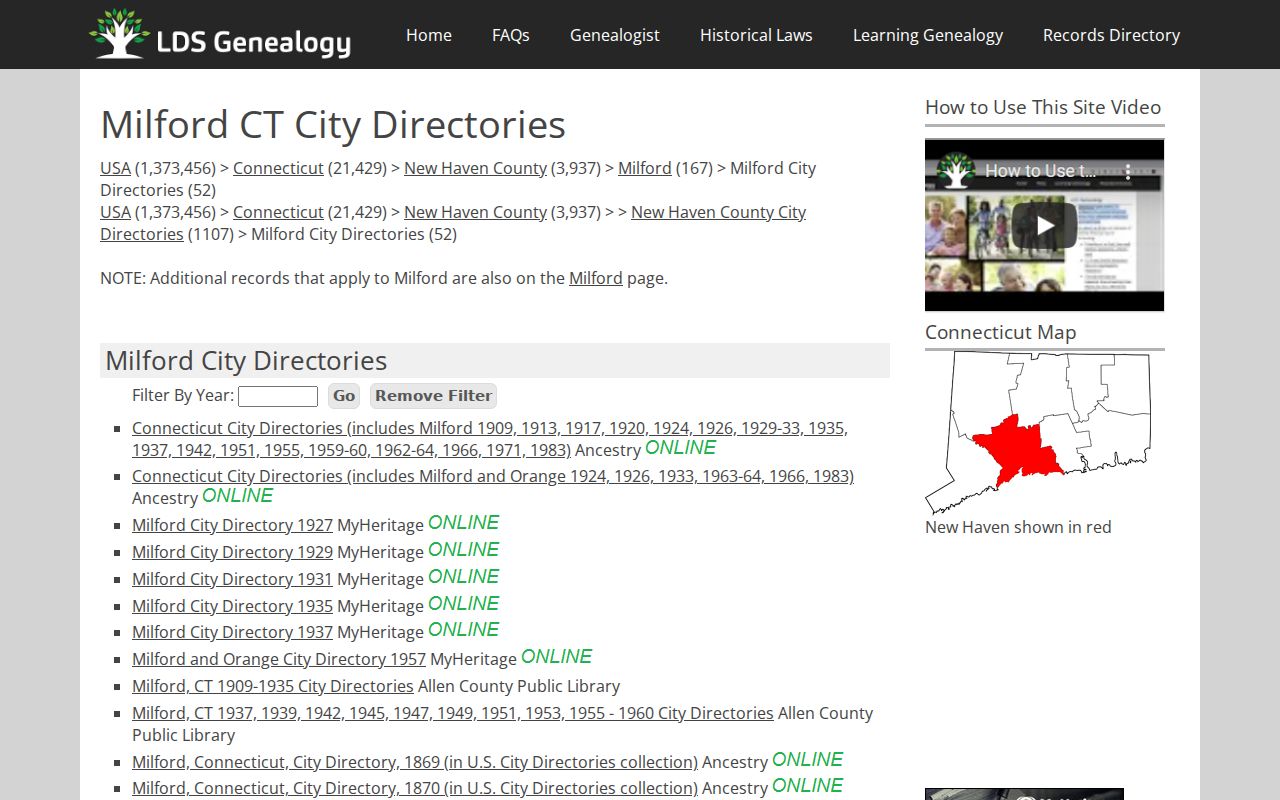
The catalog image is a year-finding aid. It does not replace checking the actual directory page or its access conditions.
Where Milford City Directories Live
The Milford Public Library Local History Room keeps directories near the Reference Desk along with local books, maps, genealogies, historical records, yearbooks, and microfilm. Visits are by appointment, and Diana Preece is listed at 203-783-3292. Staff retrieve some yearbooks and other material. The library is the best first stop when a catalog gives a year but not a shelf call number.
The digital collection has its own rules. Ancestry Library Edition is available in the library. researchIT CT supplies HeritageQuest and a Social Security Index. BiblioBoard Community Collections may use the Milford library network or a library card. ConnecticutHistory.org and Treasures of Connecticut Libraries add photographs, maps, postcards, and films. Digitized Milford newspaper material may be limited to the building or library Wi-Fi because of copyright. The Milford digital-library access page shows the database and network conditions that apply to those collections.
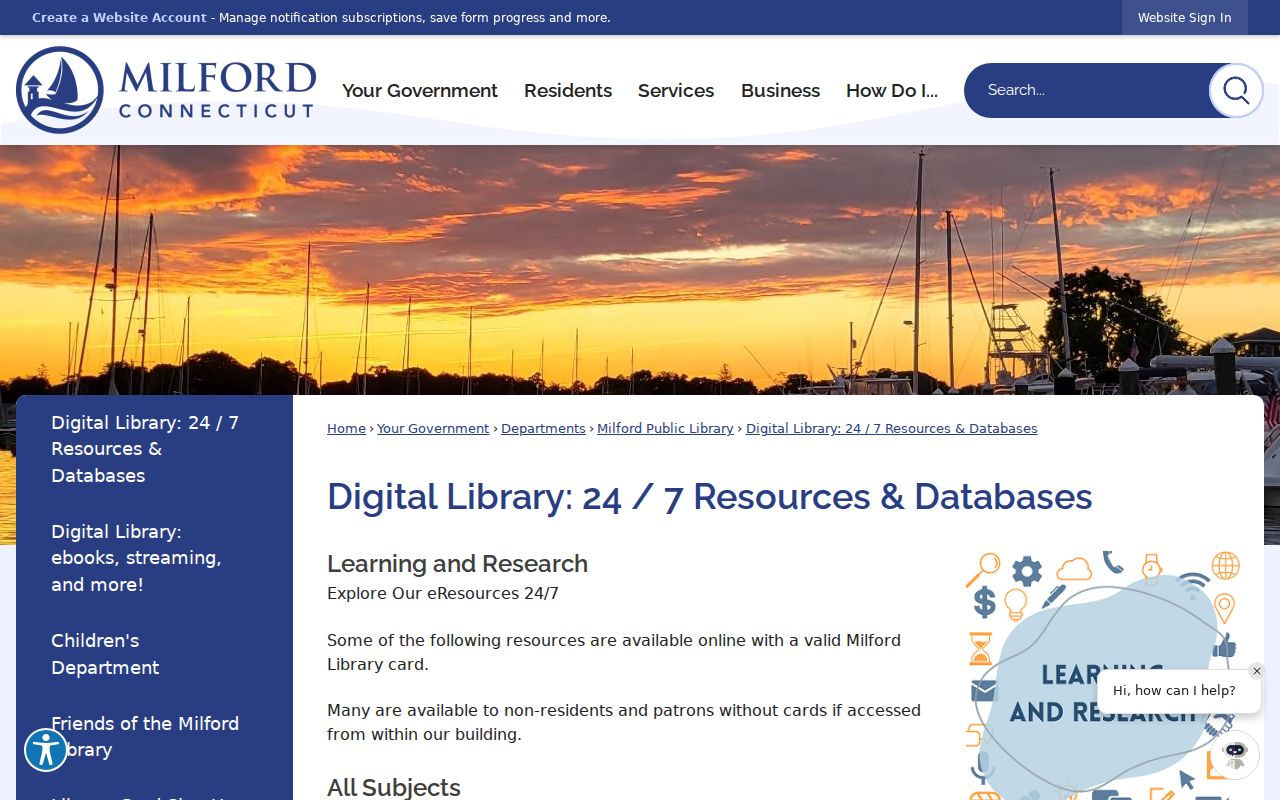
The digital-resource capture helps distinguish an online catalog or database route from the physical directory shelf. The Milford Local History Room page is the physical-collection route for the directory shelf.
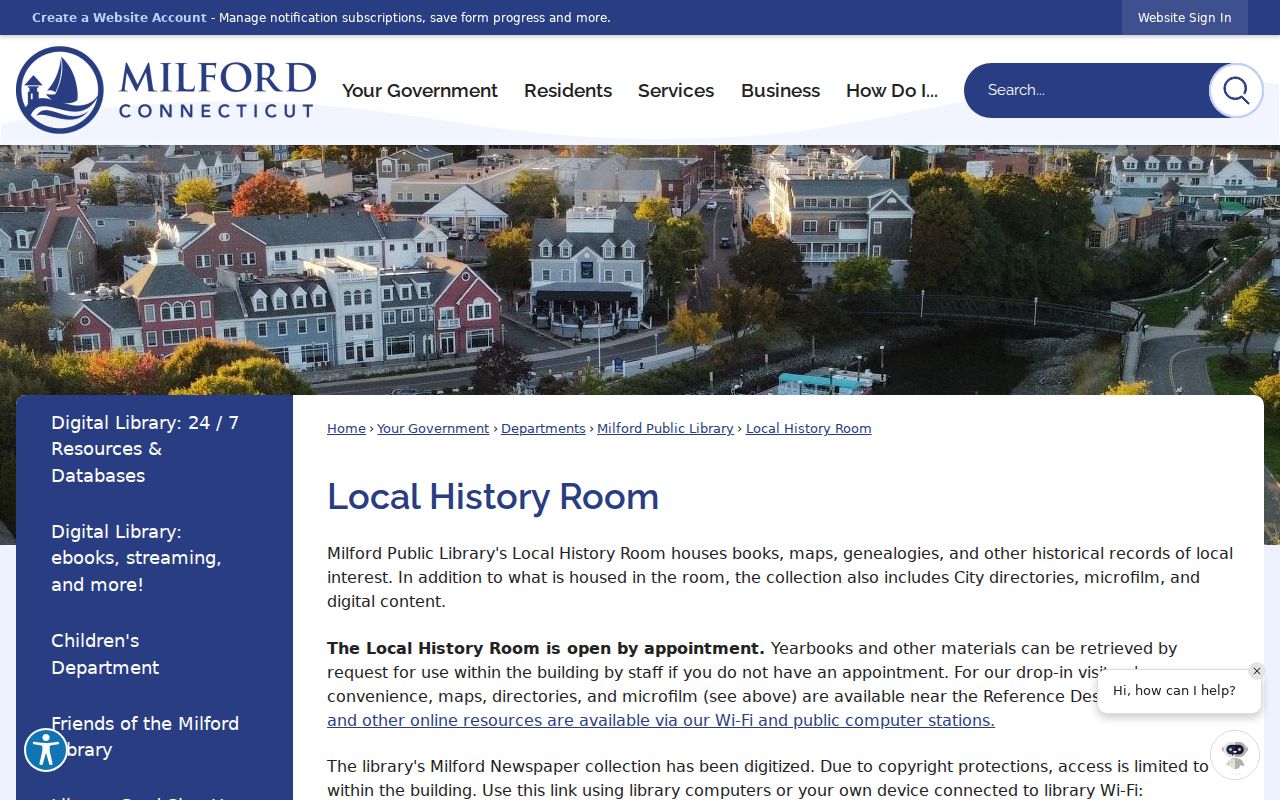
The Local History Room capture shows why a directory search often needs an appointment, a staff question, or a microfilm reader rather than only a web form.
Reading a Milford City Directory Entry
A directory entry compresses several facts into a line. The inspected 1917 Milford volume, attributed to Price and Lee Co., includes “Sackett Charles A real estate h Ocean av Wildermere Beach” on page 225. The safe inventory is surname, given name and initial, occupation, residence marker, street/address, volume year, publisher, and page. The single sample does not show a spouse field, so a spouse should not be assumed for every directory entry.
| Entry element | What to record |
|---|---|
| Name | Exact surname, given name, and initials as printed. |
| Occupation | The occupation or trade printed beside the name. |
| Residence marker | Keep “h” or another abbreviation until the volume key explains it. |
| Address | Street form, number if shown, neighborhood or place label. |
| Source | Year, publisher, page, catalog or image route. |
- Householder index
- An index organized around a residence or head of household when a volume provides that form.
- Criss-cross directory
- An address-to-name tool that can turn a street or house number into a historical lead.
- Abbreviation key
- The volume's own explanation of short marks such as a residence marker or street suffix.
- Publication snapshot
- A dated printed record that describes what was listed at publication time, not every person present.
Keep historical spelling and modern street spelling in separate notes. A modern street list can help normalize a search, but it should not silently rewrite the old entry.
Price and Lee's 1917 Milford Directory
The inspected 1917 sample supplies a useful way to read a Milford city directory without adding facts. It shows Charles A. Sackett, the occupation “real estate,” the residence marker “h,” and “Ocean av Wildermere Beach.” The page also sits near historical-notes material around pages 126-127. The volume key should be checked before expanding any abbreviation.
This kind of entry can anchor a family-history question to a year and address. It cannot, by itself, prove how long the person stayed, who else lived there, or whether the address was owned or rented. Compare adjacent annual runs, deed indexes, newspapers, and a map when the purpose is to trace a house rather than quote one line.
The sample is valuable because it preserves the compact language that a modern searcher might otherwise expand from memory. Leave “h” as printed until the source explains it.
Milford Directory Gaps and Orange Runs
A Milford city directory sometimes appears under a combined Milford and Orange title. The catalog lists 1924, 1926, 1933, 1957, 1963-1964, 1966, and 1983 in that cross-place context. A family can therefore be present in a useful volume even when a searcher looks only for a stand-alone Milford title.
When a year is missing, compare the previous and next available volumes. Record spelling variants, initials, occupations, residence marks, and address abbreviations. Then check the City Clerk's land-record path, library newspapers, or a town-record source. A gap is evidence about the collection, not evidence that a person left Milford.
The NARA 1930 city-directory finding aid helps frame the census-era runs. It is a federal finding aid, not a substitute for the library's local copy or for a complete current household record.
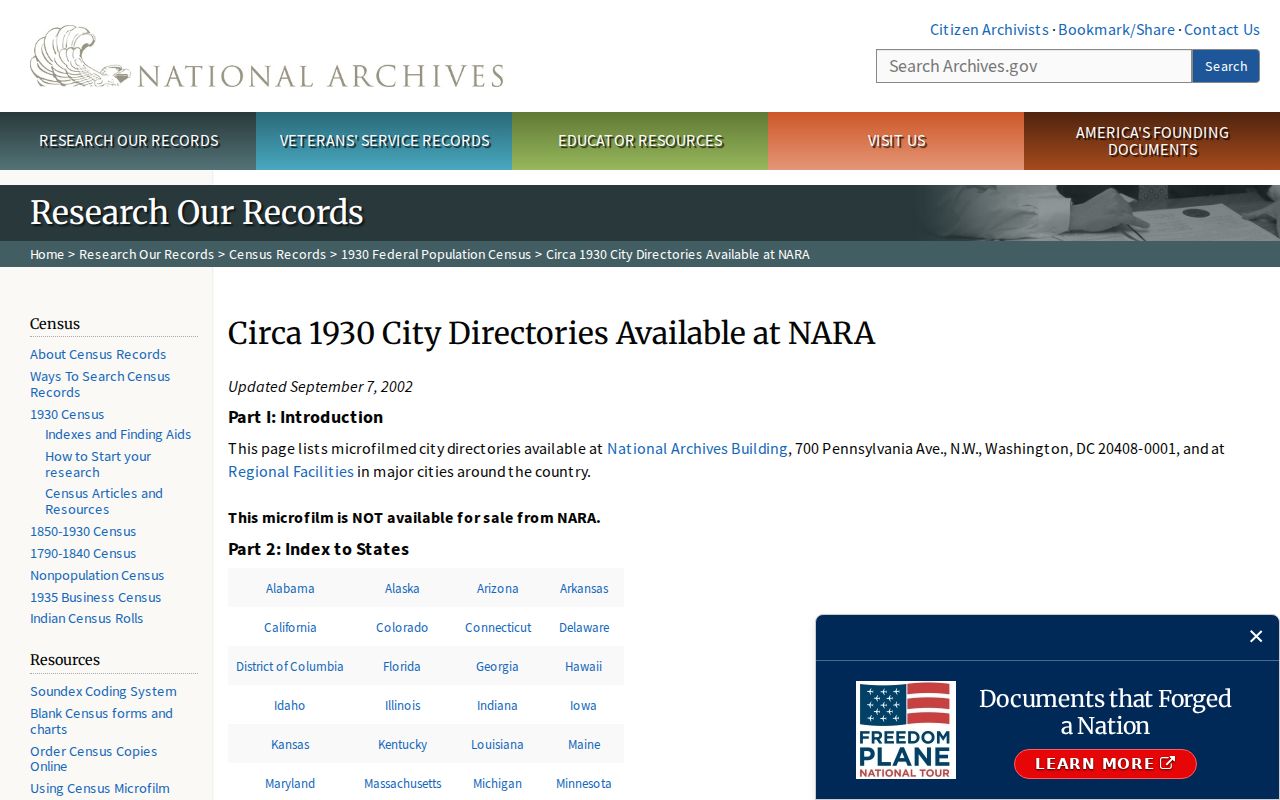
The NARA capture helps place Milford's available directory years beside census research without implying that every year is online.
Trace a Milford Directory Household Across Years
Use a city directory as one dated layer in a longer household trail. The steps below keep a publication snapshot separate from a deed, map, or current parcel card.
- Write the surname, initials, address, occupation, place label, and every spelling form found in the known year.
- Open the closest prior and next available directory years, including a Milford and Orange run when the catalog shows one.
- Compare the same street and nearby entries, watching for abbreviations, a changed number, or a neighboring place label.
- Pair the directory entries with SearchIQS grantor/grantee records, MapXpress parcel history, Sanborn sheets, newspaper microfilm, permits, or probate.
- Write the conclusion by date and source, such as “the 1917 volume printed this address,” rather than treating every entry as a current residence statement.
The modern address-keyed trail belongs in the Milford by-street records workflow. Historical directories supply the time layer that a current parcel card cannot provide.
Milford Directory Newspapers and Microfilm
Milford newspapers add dates and family connections when a directory has a gap. The library holds Milford papers, New Haven Register, and New York Times microfilm. The digitized Milford newspaper material may require access in the library building or over library Wi-Fi. The public pages do not publish a complete obituary-index title, so ask staff for the current index or search route.
A practical search starts with a surname, suspected date, and place, then checks the Milford paper and New Haven Register before comparing a death certificate, cemetery clue, or probate index. An obituary can identify relationships and a former address, but it remains a published notice and should not be treated as a current person record.
The Connecticut State Library's history and genealogy guide can fill gaps with town documents, church records, census and city directories, old-house research, probate, naturalization, military records, and family records.
Milford Historical Directory Families and Houses
The Milford Historical Society gives a city directory result physical and family context. Its Eells-Stow, Clark-Stockade, and Bryan-Downs houses connect buildings, property, furnishings, and family chronology. The Founding Families material identifies 44 founding families, more than 200 photographs, Old Milford Cemetery headstones, a library Genealogy Group, and a Memorial Bridge list of 56 surnames.
The Society's Claude C. Coffin Native American Collection contains more than 4,000 mostly Milford artifacts, with research access by appointment and discretion. These collections are not a full resident index. They are strong leads when an old surname or house needs local context beyond the printed directory.
Milford Directory Town Records and Sanborn Maps
Milford's From the Vault program adds Town Records, Board of Aldermen volumes, Revolutionary War material, and Historic Land Records. Town Records Volume 1 covers 1697-1756 in transcribed sections, Volume 2 covers 1751-1827, and Historic Land Records Vol. 1 includes original pages 1-195 with a 1639-1707 AI-assisted transcription. The original scan remains the authority when a transcription flags an uncertain spelling.
Sanborn maps are another companion. Yale lists Milford sheets for 1911, 1920, and 1925. A map can show a building footprint, use, street name, lot context, and nearby structures. It cannot name every occupant, so pair it with a city directory, deed, newspaper, or town record.
Milford's 2025-2026 digitization work is still changing the access map. More than 70,000 land-record pages were placed online, Town Records 1720-1729 were transcribed, and Historic Land Records Vol. 1 was posted with scans and an AI-assisted text version. Recheck the official collection pages before assuming a gap is permanent.