
Milford Previous-Resident Source Trail
The era table is the best starting point for a house-history search. No one source covers every Milford year or every household. A deed proves a recorded transfer. A city directory supplies a publication snapshot. A Sanborn sheet shows a building and street context. A newspaper or probate case can connect a name to an event. The previous residents trail becomes stronger when those layers are dated and kept separate.
| Source | Years it covers | Where held | What it shows |
|---|---|---|---|
| MapXpress assessment and GIS | Current, data updated nightly | Milford Assessor and GIS | MBL, owner, situs, mailing, values, building and map fields |
| SearchIQS land images | 1967-present | City Clerk portal | Recorded instruments, parties, dates, book/page and images |
| SearchIQS index books | 1639-1966, index only | City Clerk and IQS route | Grantor/grantee name bridge and section number |
| Historic land and Town Records | 1639-1707 scans; 1697-1827 town records | Milford From the Vault | Founder-era property, civic action, roads, schools and named participants |
| Printed directories | 1869-1983 in uneven runs | Library, catalogs, licensed collections | Past names, occupations, residence marks and addresses |
| Sanborn maps | 1911, 1920, 1925 | Yale and Library of Congress routes | Building footprint, use, street and lot context |
| Probate and newspapers | Online probate 2011-present; local microfilm and older material vary | PD-40, library, archives | Estate, obituary, family and dated event clues |
The date ranges describe access found in the research, not a guarantee that every page or name survives. Older index-only material may require staff assistance or an original volume.
Begin a Milford Previous-Resident Trail
Start at Milford MapXpress with House No and Street or a parcel ID. Record the MBL, parcel ID, owner name, situs/location, assessment mailing address, sale field, book/page, legal-description notes, and links to Quick Map, Summary Card, VISION, Assessor Map, FEMA, and GIS. A stable parcel identifier is safer than a street spelling alone.
The inspected parcel card for 049 726 15 lists a situs of 0 Burwell Ave. and a mailing address of 21 Burwell Avenue, Milford CT 06460. That distinction helps prevent a house-history search from following the wrong address field. The current card is a starting snapshot, not proof of the present occupant or a complete title opinion.
Once the parcel is anchored, use the Milford City Clerk land-record page and SearchIQS for the recorded trail. Keep the source date on every note.
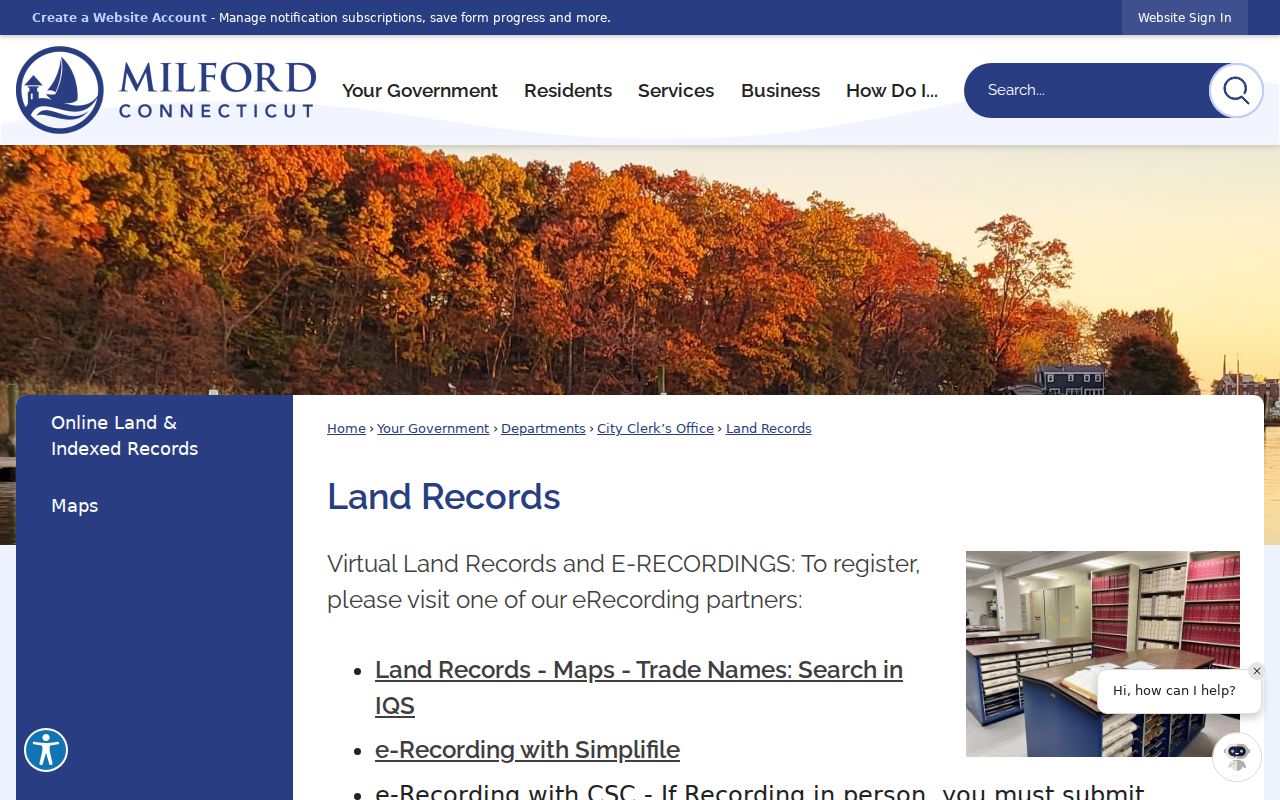
The City Clerk capture gives the current access route before the search crosses into historic volumes.
Search Milford Resident Grantors
Search the current owner as a grantee in the Milford SearchIQS land-record portal, then follow the earlier grantor. Record each transfer's recording date, instrument type, party role, book/page or document number, legal description, map reference, consideration if exposed, and image status. A grantor is the transferor; a grantee is the recipient.
Search both party roles and try spelling variants, initials, possible spouses, corporate names, and a narrow date range. Similar names are common. Check the legal description and map against the parcel before adding an instrument to the house history. A mortgage, release, lien, or map can explain a record sequence without being a transfer of occupancy.
The modern land-record image trail starts January 3, 1967. Maps start July 17, 1875. The City Clerk's ordinary copy route remains available when an image or certification is needed.
Cross Milford's 1967 Record Boundary
Milford's online eras do not line up as one continuous search. SearchIQS lists ordinary land-record index and images from 1967 forward, with record-book images for volumes 462-581 covering July 15, 1959 through January 18, 1967. Historic grantor/grantee index books cover 1639-1966 as index-only material. The transition from a modern row to an old name book is a change in method, not a reason to stop.
When the chain reaches the boundary, save the last modern book/page, then open the Milford INDEXBOOKS instructions. Choose Grantor or Grantee, enter the name, choose the corporation option where needed, note the section number, and use Go to Section only after the section is known. Ask the City Clerk at 203-783-3210 when an index entry is unclear.
The City Clerk's digitization project placed more than 70,000 pages from volumes 462-581 and associated index books online. That improves the 1959-1967 bridge, but selected older originals and historic scans still need source-by-source checking.
Use Milford's Historic Record Indexes
The historic IQS index books are a name bridge, not modern deed images. A previous-residents search should record the volume direction, exact spelling, returned section, page or reference, and any follow-up needed at the City Clerk or in the original volume. Common terms can create set-outs, so the section number is a key part of the search note.
- Chain of title
- A sequence of recorded transfers and related instruments tied to one parcel or legal description.
- Grantor
- The party transferring an interest in a recorded instrument.
- Grantee
- The party receiving the interest in that instrument.
- Legal description
- The deed's text, bounds, lot, map, or other description used to identify land.
- Book and page
- A recorded reference that helps locate the instrument in a clerk index or image set.
Spelling is evidence. The historic volume and the City Clerk's new scans preserve uncertain readings and variants. Use the original scan when an AI-assisted transcription is unclear, and do not silently modernize an old name.
Build Milford Previous-Resident History
A clean timeline keeps the backward trail readable. Put each instrument on one line with its recording date, party roles, document type, book/page, legal-description clue, and image or copy status. Then test the sequence against the parcel card, map, and the next dated source.
- Write the current MBL, owner, situs, mailing address, sale field, and map links from MapXpress.
- Find the current grantee in SearchIQS and identify the prior grantor, then move backward by book/page or document reference.
- When the date reaches 1966 or earlier, switch to the Grantor/Grantee Index Books and preserve the section number and name variants.
- Check each legal description or map reference against the parcel so a similar street or neighboring lot does not enter the chain.
- Add directory, Sanborn, newspaper, permit, Town Records, and probate evidence by date, while labeling each source's meaning.
The resulting history may show owners, transactions, or named participants without showing every person who occupied the building. A deed chain and a household history overlap, but they are not identical.
Milford Directory Snapshots Between Deeds
The Milford city directory collections supply the household layer between recorded transfers. Runs are uneven from 1869 through 1983. The inspected 1917 Price and Lee entry includes a name, real-estate occupation, residence marker “h,” and Ocean Avenue address. Compare adjacent available years, not only the first and last deed.
Sanborn maps add the physical layer. The Yale Connecticut finding aid lists Milford sheets for 1911, 1920, and 1925. A sheet can show building footprint, use, street form, and nearby structures. It cannot identify every occupant. The Library of Congress Sanborn guide explains search by state, city, date, sheet, notes, and image.
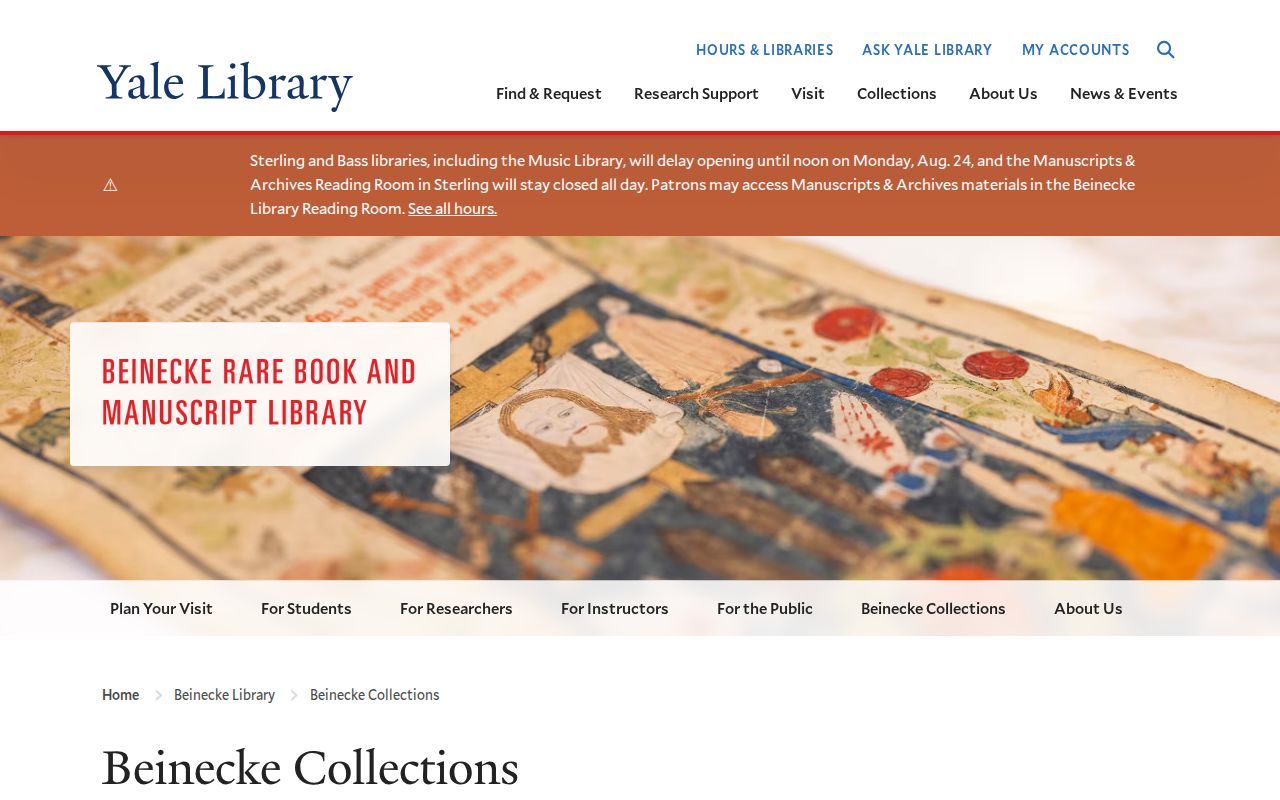
The Yale finding-aid capture anchors three physical-house moments that can be paired with a directory year and deed date. The Library of Congress Sanborn-search guide supplies the map-search context for the companion image.
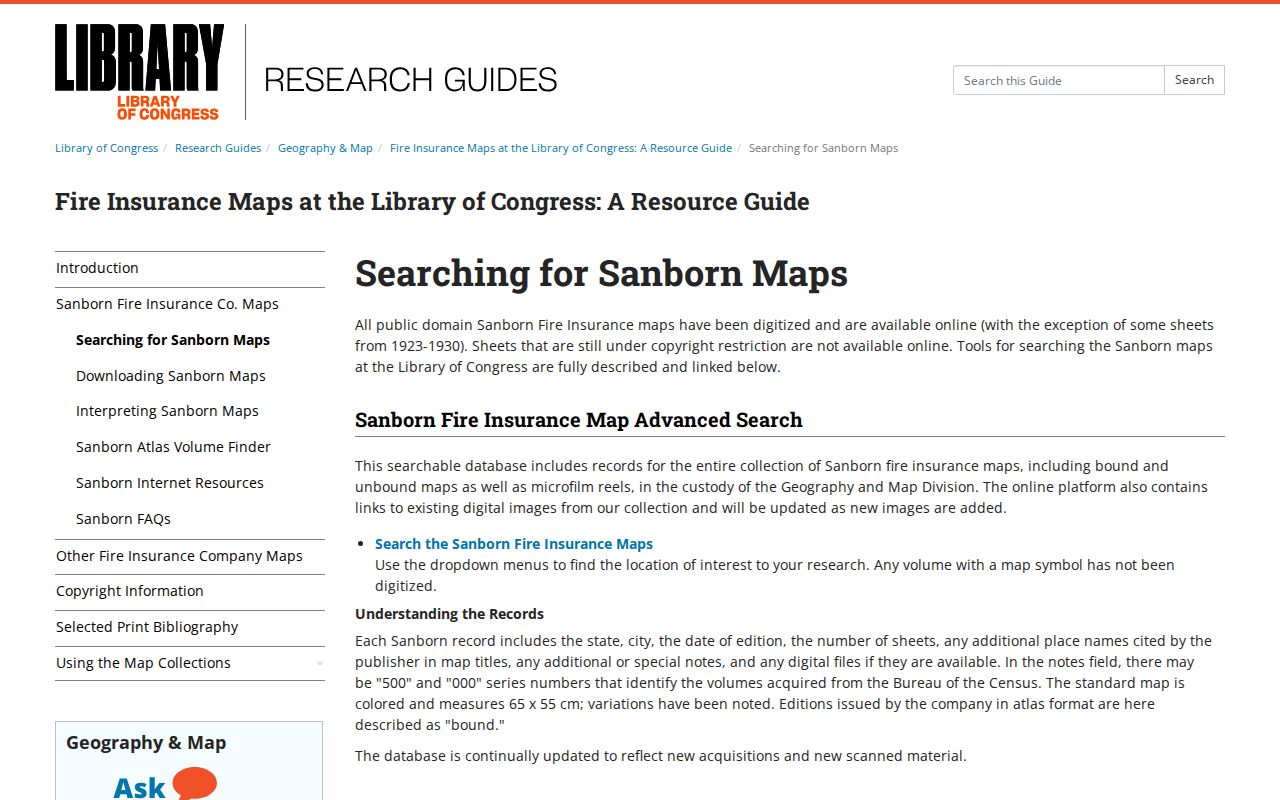
The Sanborn guide capture shows the map-search concepts without turning a building sheet into a people index.
Milford Town Records, Newspapers, and Probate
Milford's From the Vault Town Records and Historic Land Records add early context. Town Records Volume 1 covers 1697-1756 in transcribed sections, Volume 2 covers 1751-1827, and Historic Land Records Vol. 1 covers founder-era property transactions from 1639-1707 with original pages and an AI-assisted transcription. Newspapers and microfilm can add obituaries, notices, and civic events. Probate PD-40 can add estate and fiduciary clues for cases in the online range.
The Historical Society Founding Families material identifies 44 founding families, more than 200 photographs, Old Milford Cemetery headstones, and a 56-surname Memorial Bridge list. That collection can explain a surname or property context, but it is not a complete list of previous residents. The Milford Historical Society Founding Families material is the local genealogy route behind this historical capture.
The founding-family capture adds a local genealogy lead to a deed and address timeline while keeping its limited scope clear.
Milford's Previous-Resident Property Alert
A backward deed trail has a current safety companion. Milford's free IQS property-fraud alert accepts an email and up to three names in the form used on a deed. The City advises registering names with and without a middle initial because similar names can trigger. An alert reports recording information, often a book and page, and tells the recipient to inspect the official record.
An alert is not a fraud finding and it is not a substitute for SearchIQS or a City Clerk copy. Verify the recording, compare the parcel and legal description, and call 203-783-3210 if the notice is unclear. This is one of the rare local tools that monitors a name after the house history has been built.
The Milford archive links the property-fraud alert signup and management route. Use the official city domain when checking the instructions.
What the Milford Previous-Resident Trail Can Prove
A recorded deed proves that named parties took part in a recorded transaction. A directory proves that a publication printed a name and address at a stated time. A Sanborn map shows a physical structure and nearby setting. An assessment card describes a municipal property snapshot. A newspaper or probate file supplies an event or estate clue. The combined trail can support a house history, but it cannot turn every owner into an occupant or every former occupant into an owner.
Lawful house history. Use previous-resident records for genealogy, estate work, property history, and civic research. Do not use an old address trail to target, stalk, harass, threaten, or harm a person.
When a source conflicts with another, keep both dates and explain the field. A mailing address may differ from a situs. A directory year may be missing. A street abbreviation may need local-history help. The careful conclusion is often a sequence of dated records rather than one final identity claim.